
2 Days in Warsaw (2026): The Complete Itinerary
Two days is a good amount of time for Warsaw. On the first day, you’ll see the Old Town, which was rebuilt after World War II, and learn what happened in the city in 1944. The second day is slower, with a royal palace and a park, or the old streets of Praga on the other side of the river.
In this itinerary, we’ll go through both days hour by hour, with two options for Day 2. Day 1 ends with a Chopin concert, and Day 2 ends with the sunset from Highline Warsaw. We’ve also added ticket prices, opening hours, the best days to go and tips on getting around.

In Short
- Day 1 is the Old Town and the war years, with the Royal Castle, POLIN and the Warsaw Uprising Museum, then a Chopin concert at 6:00 PM.
- Day 2 has two options: Wilanów Palace and Łazienki Park, or the city center and the Praga district.
- Both options end at Highline Warsaw, the terrace at the top of Varso Tower. Try to get there about an hour before sunset.
- Wednesday and Thursday are the best two days, as many of the big museums are free on Thursdays.
- There’s no 48-hour transport ticket, so buy two 24-hour tickets for 15 zł each, or one 72-hour ticket for 36 zł.
Join Our Facebook Group
Planning a trip to Auschwitz, Krakow or Warsaw? Ask questions, swap tips and share your plans with other people heading to Poland. It’s free to join.
In This Guide
- Two Days in Warsaw at a Glance
- Best Days for 2 Days in Warsaw: Closed Days and Free Days
- Day 1 in Warsaw: The Old Town and the War Years
- Day 2 in Warsaw, Option A: Wilanów Palace and Łazienki Park
- Day 2 in Warsaw, Option B: The City Center and Praga
- Day 2 Evening: The Neon Museum and Sunset at Highline Warsaw
- Where to Eat During 2 Days in Warsaw
- What to Budget for 2 Days in Warsaw
- Getting Around Warsaw for 2 Days
- FAQ
Two Days in Warsaw at a Glance
Warsaw is bigger than Krakow, and the main stops are further apart. That’s why we’ve given each day its own part of the city. Here’s the plan, and you can move the times around as you like:
- Day 1, 9:30 AM: Castle Square and the Royal Castle
- Day 1, 11:15 AM: The Old Town Market Square and the Warsaw Uprising Monument
- Day 1, 11:45 AM: POLIN, the Museum of the History of Polish Jews
- Day 1, 3:00 PM: The Warsaw Uprising Museum
- Day 1, 6:00 PM: A Chopin concert behind the Royal Castle, then dinner
- Day 2, option A: Wilanów Palace, Łazienki Park and the Copernicus Science Centre
- Day 2, option B: The Tomb of the Unknown Soldier, the National Museum and the Praga district
- Day 2, evening: The Neon Museum and sunset at Highline Warsaw
Day 1 has two big museums, so it’s a long day on your feet, and comfortable shoes help a lot. Day 2 is easier.
Option A is better on a sunny day, as most of it is outdoors, and Option B works in any weather. In the evening, both options end up in the city center.
Best Days for 2 Days in Warsaw: Closed Days and Free Days
Each museum in Warsaw has its own closed day and its own free day, so the days you pick make a big difference. Here’s a quick overview:
| Place | Closed | Free day |
|---|---|---|
| Royal Castle | Monday | Wednesday (shorter route) |
| POLIN | Tuesday | Thursday |
| Warsaw Uprising Museum | Tuesday | Thursday |
| Wilanów Palace | Tuesday | Thursday |
| Łazienki Park buildings | Monday | Friday |
| National Museum | Monday | Tuesday |
| Praga Museum of Warsaw | Monday | Thursday |
| Fotoplastikon | Tuesday | Thursday |
Wednesday and Thursday are the best two days, and Thursday and Friday also work well. Monday and Tuesday are the hardest, because most of the big museums are closed on one of them.
A weekend works too, and on Sunday you can watch the changing of the guard at 12:00 PM. Most shops in Poland are closed on Sundays, though restaurants and cafés are open.
Day 1 in Warsaw: The Old Town and the War Years
9:30 AM: Castle Square and the Royal Castle
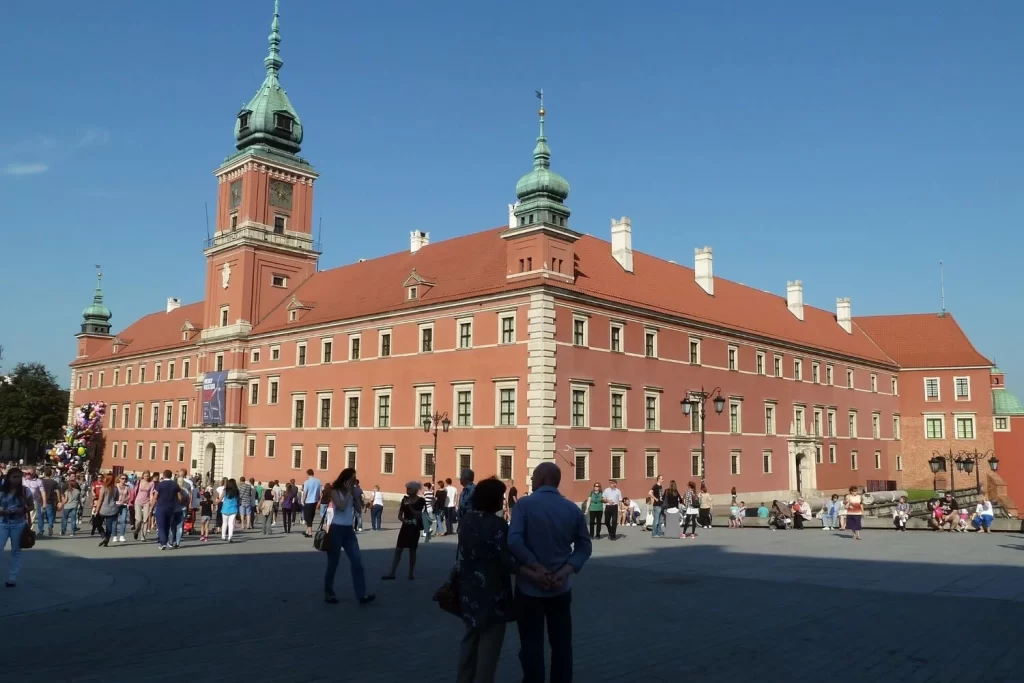
Start at Castle Square, next to Sigismund’s Column. This is where the Old Town begins. More than 85% of Warsaw’s historic center was destroyed in 1944, and everything you see around you was rebuilt after the war.
The Royal Castle is on the east side of the square. The Germans blew it up in 1944, and work to rebuild it only started in 1971. It opened again in 1984.
The castle opens at 10:00 AM, Tuesday to Sunday, and it’s closed on Mondays. It closes at 5:00 PM in the colder months and a bit later in summer, with last entry an hour before closing. Every ticket comes with an audio guide, and you can choose between three routes:
- Royal Route: The King’s Apartments, the Throne Room and the Canaletto Room, which has paintings of old Warsaw. It costs 60 zł, or 45 zł reduced, and takes about an hour.
- Museum Route: The old Parliament halls, paintings by Jan Matejko and the Lanckoroński Gallery. It also costs 60 zł, or 45 zł reduced, and takes about 1.5 hours.
- Castle Route: Both routes in one ticket for 95 zł, or 75 zł reduced. Plan about 2.5 hours.
We’d pick the Royal Route for this plan, so you still have time for the rest of the day. The Lanckoroński Gallery has two paintings by Rembrandt, which were given to the castle in 1994. They’re also on the free Wednesday route.
The free Wednesday route can’t be booked. Free passes are given out at the desk on the day, and there’s a daily limit, so try to be there at 10:00 AM.
11:15 AM: The Old Town Market Square
The Old Town Market Square is about a three-minute walk from the castle. The tall, colorful houses around the square were rebuilt after the war, and old paintings and photos were used to get the details right. The whole Old Town is on the UNESCO World Heritage list.
The Mermaid statue is in the middle of the square, and she’s the symbol of Warsaw. The statue here is a copy. The 1855 original was moved into the Museum of Warsaw in 2008 to protect it, and the museum is on the north side of the square.
The square is free to walk around at any time. In the warmer months, cafés put tables out on the square, so it’s a good place for a coffee before the museums.
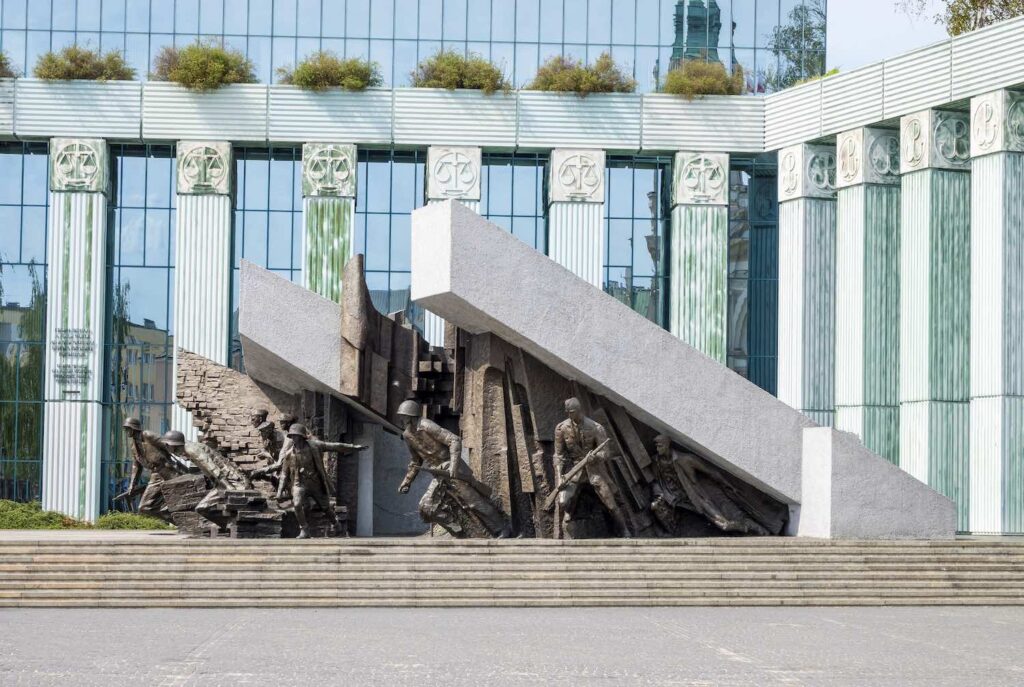
Next, walk about eight minutes north and you’ll reach Krasiński Square and the Warsaw Uprising Monument. The bronze fighters stand below tilted concrete walls, and some of them are going down into a sewer. The monument was unveiled in 1989, and you can see it for free at any time.

11:45 AM: POLIN, the Museum of the History of Polish Jews
POLIN is about a 15-minute walk from the monument, past Krasiński Garden. The museum is in the area of the former Warsaw Ghetto. It covers 1,000 years of Jewish life in Poland, not only the Holocaust.
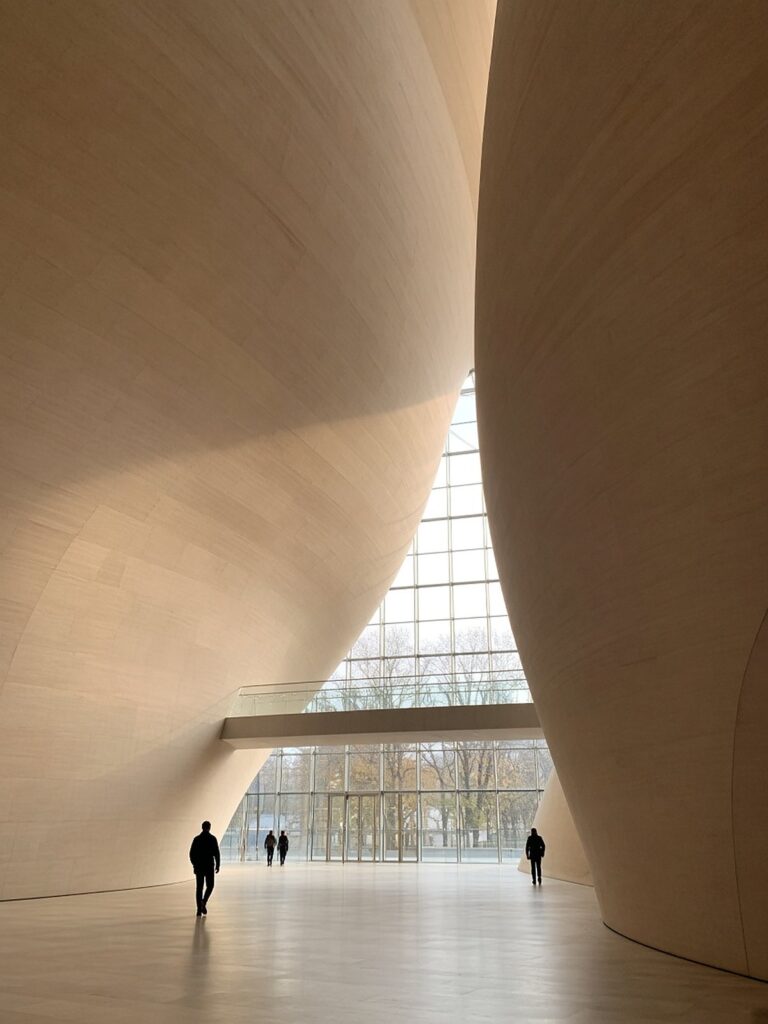
The main hall has tall, curved walls, and you’ll walk through it as soon as you come in. In the main exhibition, you’ll reach a painted wooden ceiling from a 17th-century synagogue. It was rebuilt by hand in full size with old tools and methods, and it was put in the museum in 2013.
A ticket costs 45 zł, or 35 zł reduced. That includes an audio guide and the temporary exhibitions. Entry is free on Thursdays, and you can buy tickets online or at the desk on the day.
POLIN is open 10:00 AM–6:00 PM, and until 8:00 PM on Saturdays. It’s closed on Tuesdays. The last entry to the main exhibition is two hours before closing.
Plan about two hours inside, and then go for a late lunch. The main exhibition is big, so with less time, choose the periods that interest you most and skip the others.
3:00 PM: The Warsaw Uprising Museum
After lunch, take the M2 metro line to Rondo Daszyńskiego. Trams also stop right outside the museum, at a stop with the museum’s name. The museum covers the 63 days in 1944 when Warsaw rose up against the German occupation.
It’s in an old tram power station, and it’s a big museum, with more than 3,000 m² of exhibits. There are about 800 objects and 1,500 photos, films and sound recordings. These are the parts we’d make time for:
- The Liberator bomber: A full-size copy of the B-24J plane that dropped supplies to the fighters. It’s in Hall B.
- City of Ruins: A 5-minute 3D film that flies over the destroyed city in 1945. It’s included in the ticket.
- The tower: A viewpoint over Freedom Park and the city.
Tickets cost 35 zł, or 30 zł reduced, and the audio guide is 13 zł. You can also play the audio guide on your own phone for 10 zł, so bring headphones.
The museum closes at 6:00 PM, and tickets are sold until 30 minutes before closing. To have enough time inside, get there by 3:30 PM at the latest. It’s closed on Tuesdays and free on Thursdays, when free passes are given out at the desk on the day.
Plan about two hours inside. Children under 13 need to come with an adult, and the full visit is recommended for ages 13 and up. Big bags go in the lockers, which take a 5 zł coin that you get back.
The monument you saw in the morning at Krasiński Square is for the same fighters, so you’ll recognize some of the story here.
6:00 PM: A Chopin Concert, Then Dinner
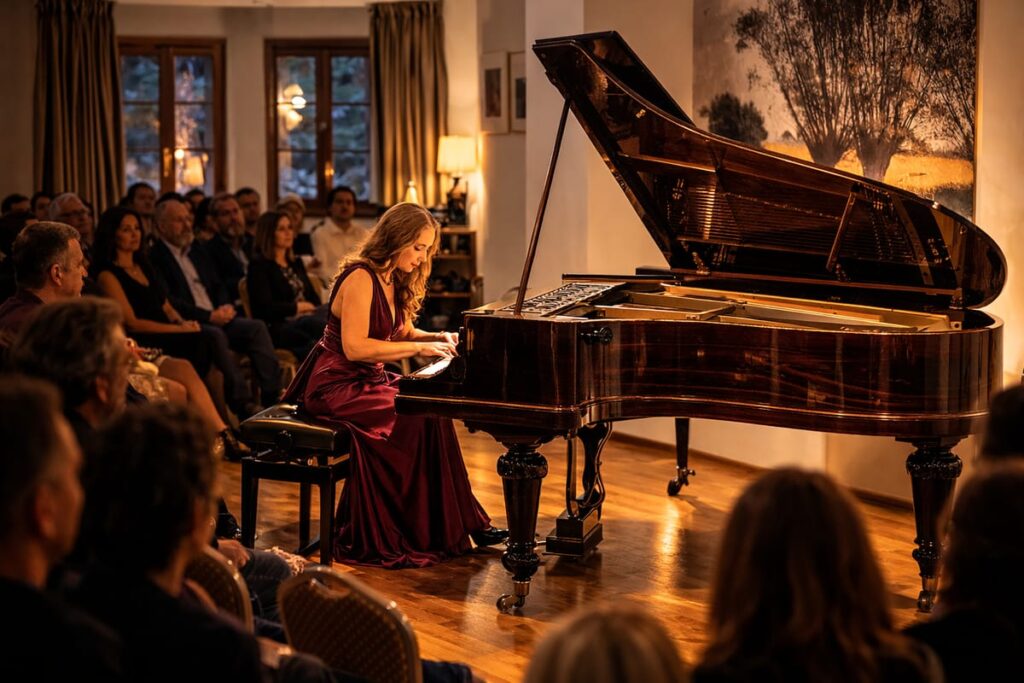
End the first day back in the Old Town with an hour of Chopin. A pianist plays every evening at 6:00 PM in Salon Pleyel, a small hall at Kanonia 20/22. Kanonia is a little square right behind St John’s Cathedral and the Royal Castle, about four minutes on foot from Castle Square.
To get there from the Uprising Museum, take a taxi, or ride the metro back toward the center and walk the rest. Give yourself about half an hour.
The concert takes about an hour in total. The pianist plays for 45 minutes in two parts, with a short break in between. Here’s what to expect:
- The music: Only Chopin, mostly his best-known nocturnes, mazurkas, polonaises and études. The program changes each day.
- The piano: A restored Pleyel concert piano. Pleyel was Chopin’s favorite piano maker.
- The break: You get a glass of Polish mead or apple juice.
- What to wear: There’s no dress code. Smart-casual clothes are fine.
Tickets start at about 65 zł, and some dates sell out, so book ahead if you can. Seats aren’t numbered, so get there 15 to 20 minutes early for a good seat.
Children can come along if they’re happy to stay quiet for an hour. Flash photos and filming aren’t allowed while the music is playing, but you can take a quick photo during the applause.

After the concert, you can have dinner right there in the Old Town, as there are plenty of Polish restaurants. Nowy Świat has even more choice, and it’s about 15 minutes away on foot. On Friday and Saturday nights, it’s a good idea to book a table.
The Chopin Museum is closed for a big renovation at the moment, so check its website before you plan a visit. If you walk down Krakowskie Przedmieście to Nowy Świat, stop at Holy Cross Church. Chopin’s heart is kept inside one of its pillars.
Day 2 in Warsaw, Option A: Wilanów Palace and Łazienki Park
Morning: Wilanów Palace and Gardens
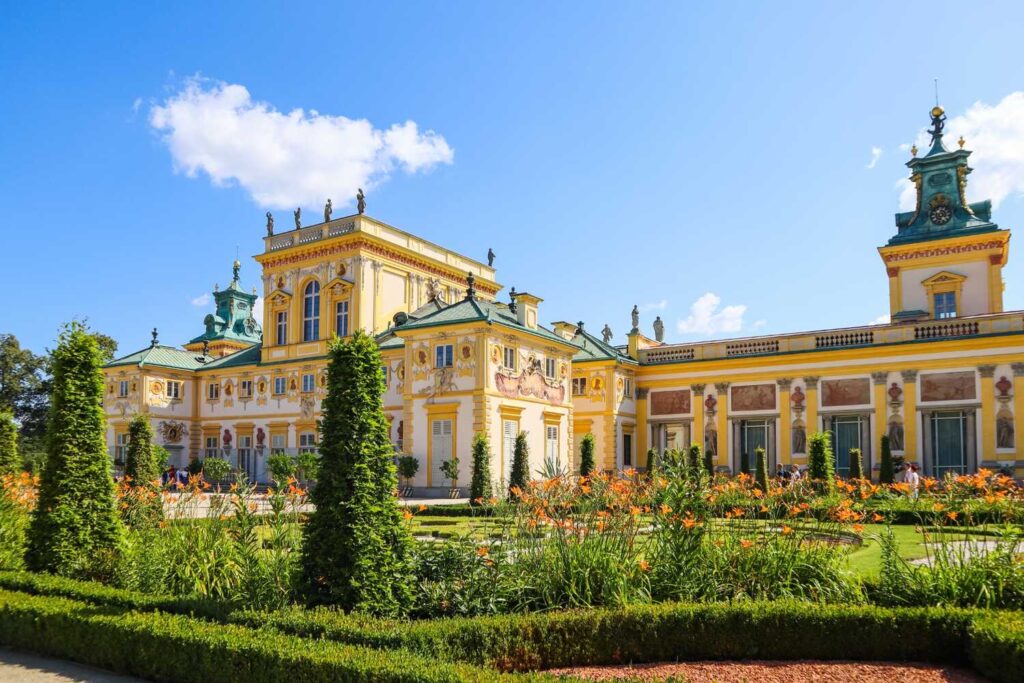
Option A is a day of royal palaces and parks, so save it for good weather. Wilanów Palace is about 10 km south of the center. It was the summer home of King Jan III Sobieski, who started building it in 1677.
In 1805, the owner opened his art collection here to the public. The museum calls this the start of the first art museum in Poland. Inside the palace, you’ll see the royal apartments, the King’s Library and a gallery of paintings.
Buses 116 and 180 both take the Royal Route out of the city center and stop near the palace. The museum lists several other bus lines that stop near the palace too.
A palace ticket costs 70 zł in the warmer months and 60 zł in winter, with half-price reduced tickets, and it includes the park. Children under 8 go free, and ages 8 to 26 pay just 1 zł. The audio guide is 14 zł, and a ticket for the park only costs 15 zł.
On Thursdays, the palace, the gardens and the park are all free, and you pick up your ticket at the ticket office. The number of palace tickets is limited, so get there early on a Thursday.
The palace opens at 10:00 AM and closes at 4:00 PM on most days, or 3:00 PM on Saturdays. Last entry is an hour before closing.
The gardens open at 9:00 AM. In summer they’re open until 9:00 PM, but in late autumn and winter they close at 4:00 PM. Plan about two hours for the palace and a walk in the gardens.
You can buy palace tickets at the palace or online. Another option is a guided tour from Warsaw, which includes the tickets and a guide, so you don’t need to buy them yourself.
Afternoon: Łazienki Park and the Palace on the Isle
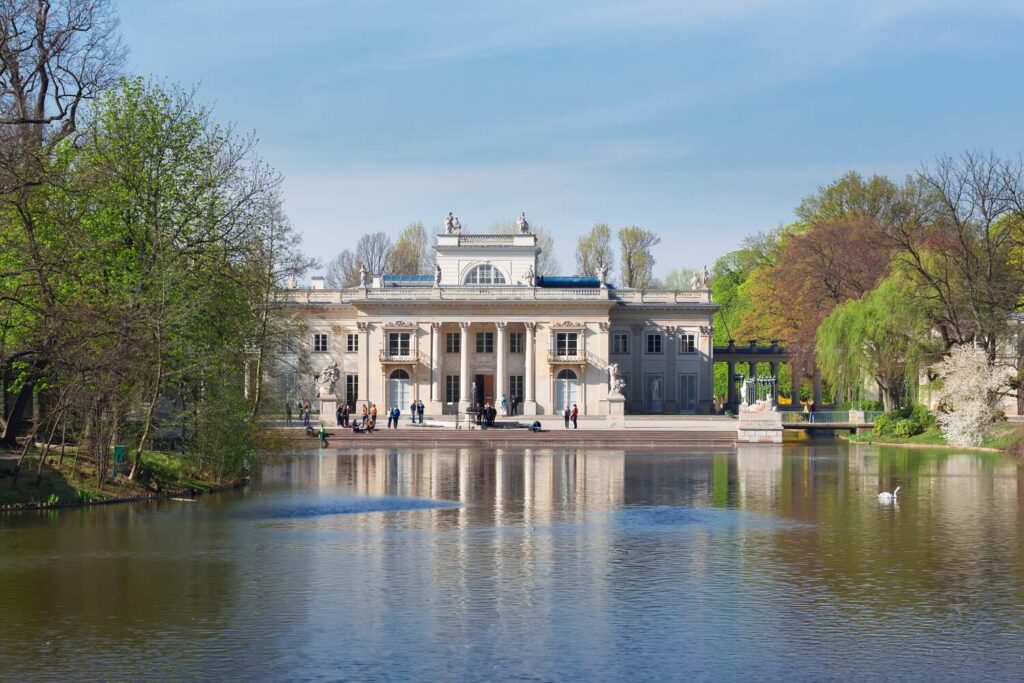
After lunch, take bus 116 or 180 back north to Łazienki Park, the best-known park in Warsaw. It’s free, and it’s open every day 6:00 AM–9:00 PM.
The Palace on the Isle is on a lake in the middle of the park. It was first built as a bathhouse in the 17th century. Later, it was rebuilt as the summer home of King Stanisław August, who held his well-known Thursday dinners there for writers and scholars.
One ticket covers the Palace on the Isle and three other buildings. It costs 60 zł, or 30 zł reduced, and ages 8 to 26 pay 1 zł.
You can’t buy a ticket for just one palace, and seeing all four buildings takes about 2.5 hours. In this plan, we’d only go into the Palace on the Isle and spend the rest of the time in the park.
The buildings are closed on Mondays. On Fridays they’re free, but only the ground floor of the Palace on the Isle is open. In the colder months, the palace closes at 4:00 PM on Tuesdays, Wednesdays and Sundays, so plan to get there by about 3:00 PM on those days.
The park is also home to the Chopin Monument. Chopin is shown under a willow tree bent by the wind. The Nazis destroyed the first statue in 1940, and the copy you see today was put up in 1958.
On Sundays in summer, free Chopin piano concerts are held at the monument at 12:00 PM and 4:00 PM. You don’t need a ticket for these.
Late Afternoon: Copernicus Science Centre or the Vistula Riverbank
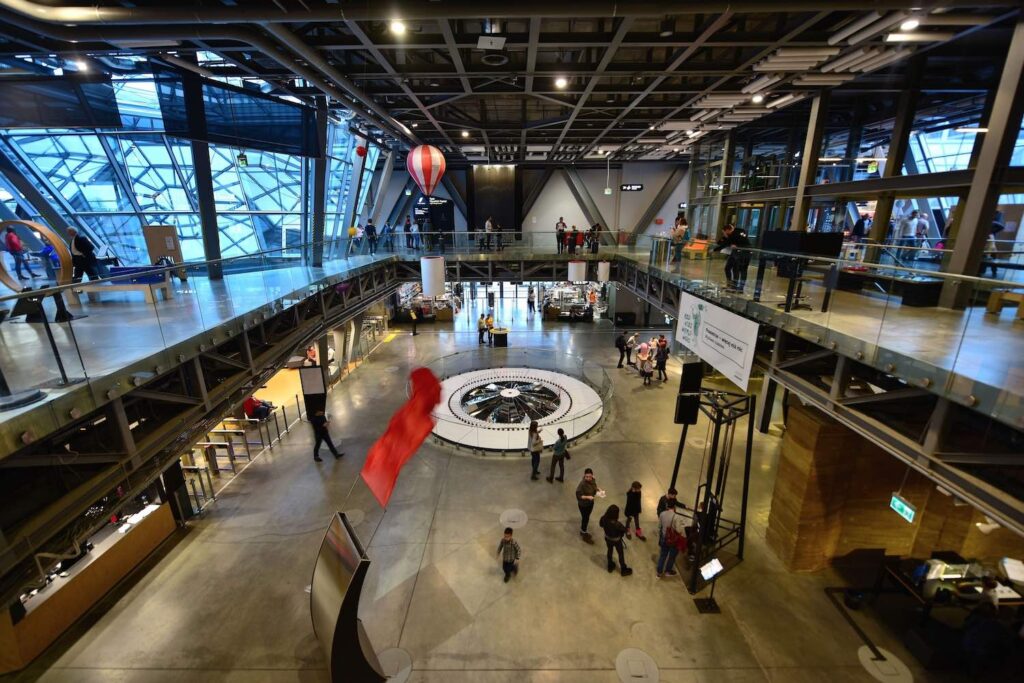
With kids, or on a rainy afternoon, finish at the Copernicus Science Centre by the river. It opened in 2010, and it has about 350 hands-on exhibits that you can touch and try out.
Exhibition tickets cost 48 zł on weekdays and 50 zł on weekends, or 34 zł and 36 zł reduced. A ticket that adds the planetarium costs 68 zł on weekdays and 70 zł on weekends. The planetarium has a dome 16 meters wide, and it shows films about space.
Copernicus is open 9:00 AM–6:00 PM Monday to Thursday, until 8:00 PM on Fridays and until 7:00 PM on weekends. The ticket desks close an hour before closing time.
Tickets are for a set time, and you can go in up to 30 minutes before or 60 minutes after it. Most tickets are sold online, so book before you go. It’s also closed on a few Mondays for maintenance, so check the dates on its website.
The M2 metro stop Centrum Nauki Kopernik is right next to it. If you also want to see the Neon Museum in the evening, leave by about 4:30 PM.
Without kids, you can walk along the Vistula boulevards instead. They’re about 15 minutes from Copernicus on foot. Between May and September, a free fountain show is held by the river below the Old Town on Friday and Saturday nights, once it gets dark.
Day 2 in Warsaw, Option B: The City Center and Praga
10:00 AM: The Saxon Garden and the Tomb of the Unknown Soldier
Option B stays closer to the center, which is convenient. Start at the Saxon Garden, which opened to the public in 1727 as the first public park in Poland. It’s free and open 24 hours.
Here’s what to look for as you walk through the garden:
- Baroque statues: 21 of them survived the war, and you’ll find them along the paths.
- The fountain: A large fountain designed by the architect Henryk Marconi.
- The sundial: A marble sundial from 1863.
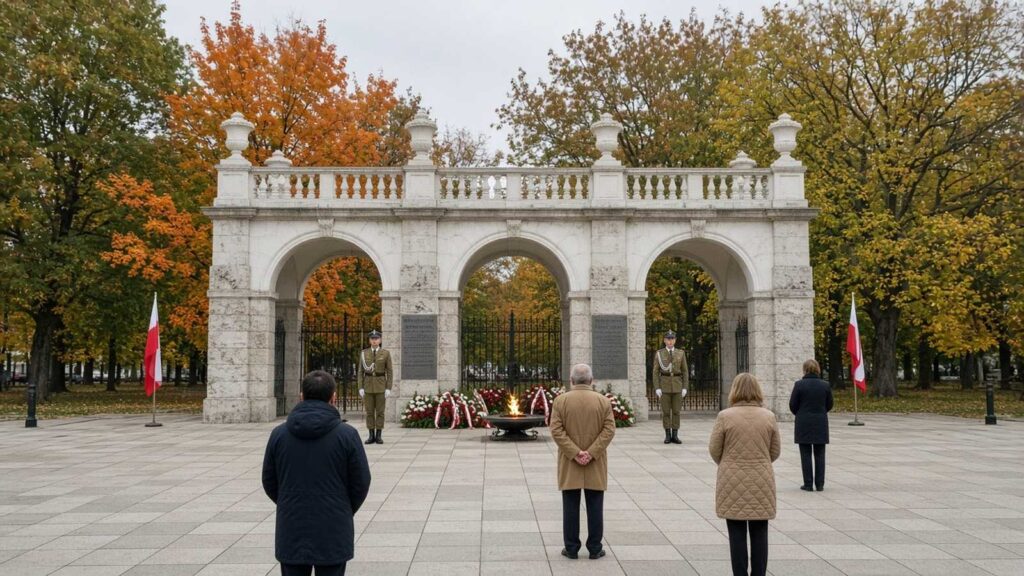
At the edge of the garden is the Tomb of the Unknown Soldier, which soldiers guard day and night. The tomb was unveiled in 1925 under the arcade of the Saxon Palace, and it was designed by the sculptor Stanisław Ostrowski.
The Germans blew up the palace in late 1944, and only the middle part of the arcade survived. Soldiers have guarded the tomb since just after the war.
The plaques on the pillars list the battlefields where Polish soldiers fought. The palace behind the tomb is now being rebuilt, so you may see building work.
The ceremonial changing of the guard is on Sundays at 12:00 PM, on Piłsudski Square. It’s free to watch, so on a Sunday, plan your morning around it. On other days, two soldiers still stand guard all day and night.
10:45 AM: The Fotoplastikon
The Fotoplastikon is about 20 minutes on foot from the tomb. It’s an old 3D photo viewer from the early 1900s. You look through small lenses in a big wooden drum while old photos move past.
It has been showing 3D photos here, at Aleje Jerozolimskie 51, for more than a century. The drum has 24 viewing places, and one show has 48 photos.
A full show takes about 12.5 minutes, and the whole visit takes about 30 minutes. Tickets cost 10 zł, or 6 zł reduced. It’s open 10:00 AM–6:00 PM, closed on Tuesdays and free on Thursdays.
You go in through a courtyard, and there are steps, so it’s hard with a stroller or a wheelchair. The Fotoplastikon belongs to the Warsaw Uprising Museum. It’s also about six minutes on foot from the Palace of Culture.
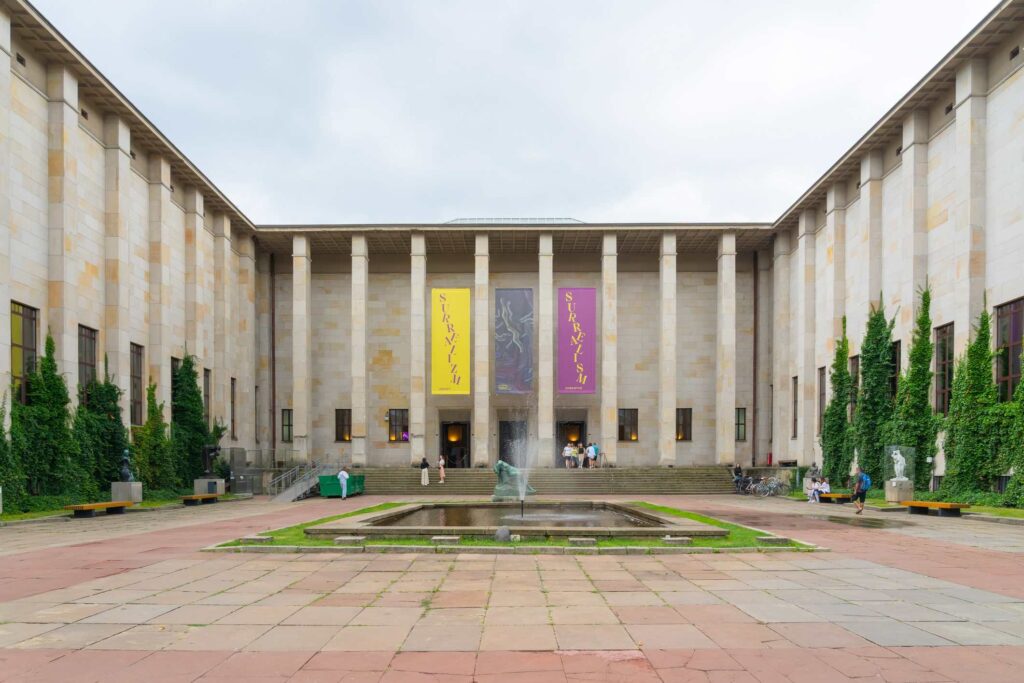
11:30 AM: The National Museum in Warsaw
The National Museum is about 15 minutes away on foot. If you like art, these are the two rooms to head for:
- The Battle of Grunwald: Jan Matejko’s huge painting from 1878, in the 19th-century gallery.
- The Faras Gallery: Medieval wall paintings from a cathedral in Nubia, in today’s Sudan.
Tickets to the permanent galleries cost 30 zł, or 15 zł reduced, and ages 8 to 26 pay 1 zł. The museum is open 10:00 AM–6:00 PM, and the ticket desks close 45 minutes earlier.
It’s closed on Mondays, and the permanent galleries are free on Tuesdays. On Fridays it’s open until 8:00 PM, and tickets are half price after 5:00 PM. Some galleries can be closed for work, so check the website if you want to see something in particular.
Plan about two hours here. Then have lunch in the center before you cross the river.
2:00 PM: The Praga Museum of Warsaw
After lunch, take the M2 metro across the river to Dworzec Wileński, and the Praga Museum is about four minutes on foot from the station.
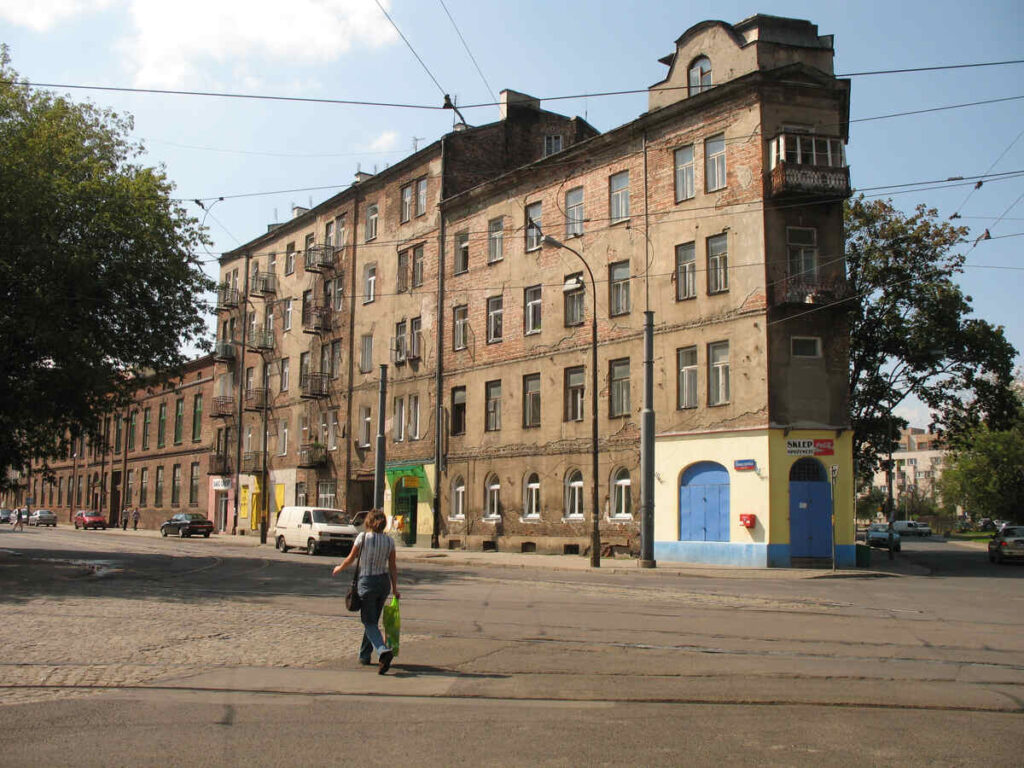
Praga was damaged much less in the war than the Old Town, so many of its buildings are original. This is what a lot of Warsaw looked like before the war.
The museum is at Targowa 50/52, and it tells the story of the district and the people who lived there. Most labels are in Polish, so a translation app on your phone helps. For 1 zł extra, you can go up to the museum’s small viewing deck.
The permanent exhibition costs 15 zł, or 10 zł reduced. It’s free on Thursdays, when the museum is open until 8:00 PM. On other days, it closes at 5:00 PM on weekdays and 6:00 PM on weekends, and last entry is 30 minutes before closing.
It’s closed on Mondays, and it sometimes closes for a few weeks at a time, so check the website before you go. For this plan, an hour is enough, but a full visit can take up to two hours.
3:30 PM: Ząbkowska Street and Koneser
Koneser is about an eight-minute walk from the museum. It’s an old vodka factory, and today it’s full of restaurants and bars, so it’s a good stop for a coffee or an early drink.
Koneser is also home to the Polish Vodka Museum, which has guided tours. The basic tour costs 70 zł, but it isn’t offered on Fridays and Saturdays. On those days, the tours start at 80 zł.
Ząbkowska Street is right next to Koneser, with cafés, street art and old brick houses. Many of the houses here are real pre-war buildings, and some of them have their old courtyards. Afterward, take the M2 metro back toward the center for the evening.
Day 2 Evening: The Neon Museum and Sunset at Highline Warsaw
5:00 PM: The Neon Museum at the Palace of Culture
Both Day 2 options end at the Palace of Culture and Science, the tall tower in the middle of the city. The Neon Museum moved here from Praga recently, so older guides may still send you across the river.
The museum is now on the 4th floor of the Palace of Culture, and you go in from Marszałkowska Street. The collection has more than 300 old signs, and about 100 restored neons are on show. The exhibition focuses on the neon signs of the 1970s.
Tickets cost 28 zł, or 18 zł reduced, and children under 6 go free. You buy them at the museum desk, so you don’t need to book.
It’s open 11:00 AM–6:00 PM, and until 7:00 PM on Fridays and Saturdays. If you arrive by 5:00 PM, you’ll have enough time to see it all.
The Palace of Culture itself was built between 1952 and 1955. At first it was named after Stalin, and his name was dropped in 1956. Its viewing terrace is on the 30th floor at 114 m, and it costs 30 zł and is open until 8:00 PM every day.
Sunset: Highline Warsaw at Varso Tower
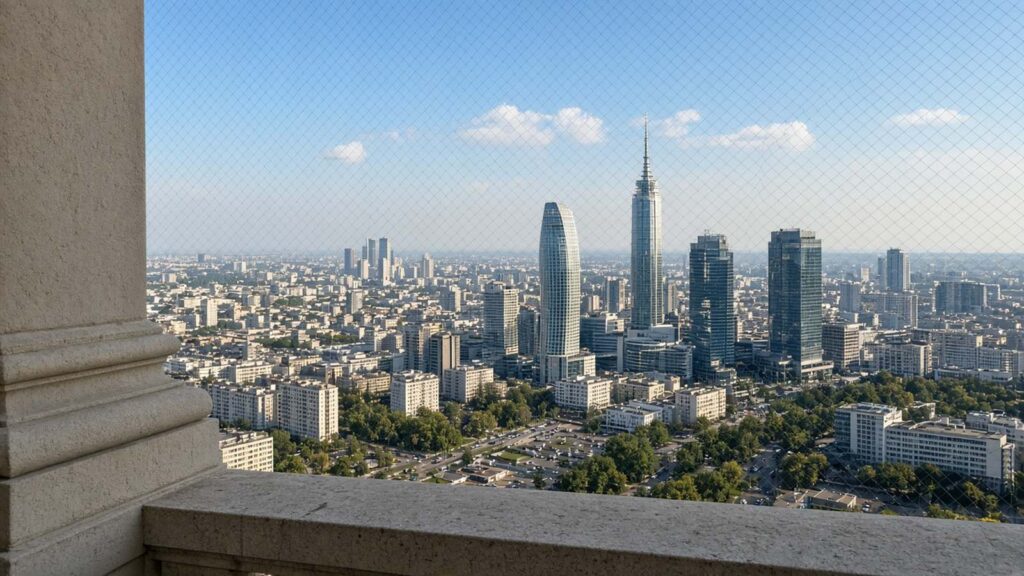
To finish your trip, go up to Highline Warsaw for the highest view in the city. It’s at the top of Varso Tower, the tallest building in the EU, which is 310 m tall with its spire. It’s about a 10-minute walk from the Palace of Culture and four minutes from Warszawa Centralna station.
The entrance is on Chmielna Street, at Chmielna 69. You go up in a glass lift, so you can see the city on the way up. Highline is on three floors:
- 46th floor: A room with films about Warsaw’s history on big screens, plus a gift shop.
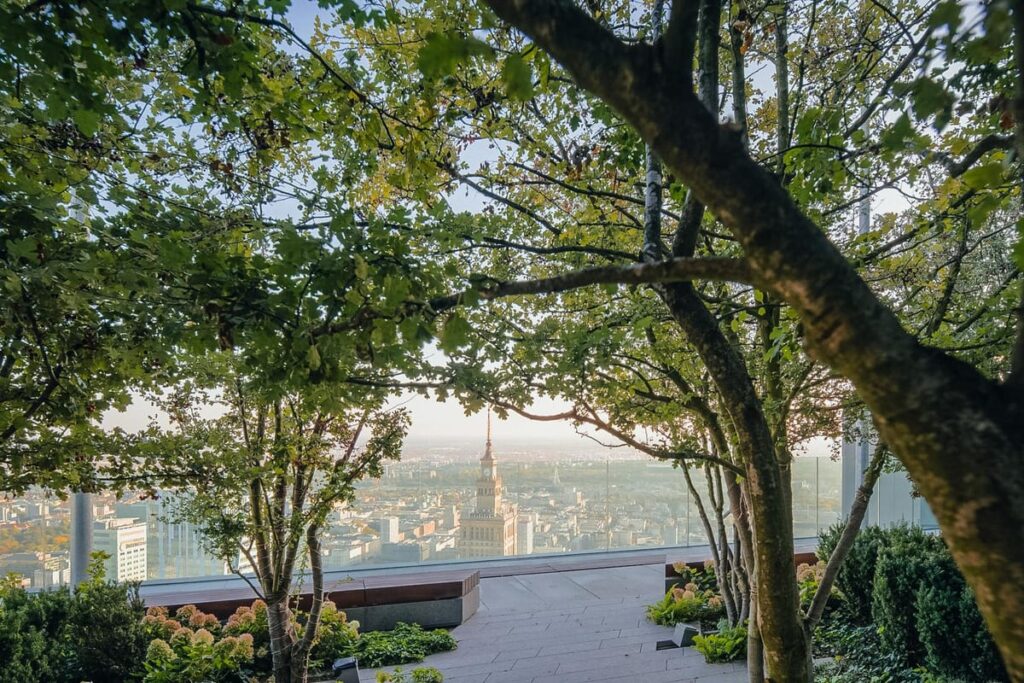
- 49th floor, the HighGarden Rooftop Lounge: A cocktail bar with a real garden terrace outside, facing the Palace of Culture. You need a terrace ticket to get in.
- 53rd floor, the viewing terrace: A 360° terrace at 230 m, which is the highest terrace in the EU.
This terrace is twice as high as the one at the Palace of Culture. From Highline, you look down on the Palace of Culture. From the Palace of Culture terrace, you look across at Varso and the other towers.
For sunset, Highline is the better choice, because the Palace of Culture terrace closes at 8:00 PM. Highline is open every day 10:00 AM–10:00 PM, and last entry is at 9:00 PM. The HighGarden is open until midnight.
Tickets start at about 45 zł online, and they cost more at the desk, where there can also be a line.
Young people and students pay from 30 zł, and children aged 4–11 pay from 15 zł. Children under 3 go free.
Tickets are for a set time, and you can go in up to 15 minutes after your time, but not earlier. You can change the date or time online up to 24 hours ahead, which helps if the weather changes.
The most popular time is golden hour, about an hour before sunset. In summer the sun sets at about 9:00 PM, and last entry is at 9:00 PM, so book an early-evening time. In winter it’s dark before 4:00 PM, so go up to Highline first and see the Neon Museum afterward.
In very bad weather, the outdoor terrace can be closed for a while, so check the forecast before you book a sunset time. There are no steps, and strollers are allowed, so it’s easy with kids.

Where to Eat During 2 Days in Warsaw
Polish food is filling and good value, and you’ll find it at every price in Warsaw. Here’s what we’d look for during your two days:
- Pierogi: The easiest dish to start with. Try ruskie, the classic filling of potato and white cheese.
- Milk bar (bar mleczny): A simple canteen with home-style Polish dishes at low prices. You order at the counter, and the menu is often only in Polish.
- Hala Koszyki: An old market hall at Koszykowa 63, full of small restaurants and bars. It’s open until at least 11:00 PM every day, so it’s an easy choice for dinner.
- Pączki: Round Polish doughnuts with a sweet filling, sold in bakeries around the city.
- Koneser in Praga: Restaurants and bars in an old vodka factory, which fits Option B on Day 2.
On Day 1, you’ll have lunch between POLIN and the Uprising Museum, so look for a place near POLIN before you take the tram or metro. A translation app on your phone helps a lot with Polish menus.

What to Budget for 2 Days in Warsaw
Two days in Warsaw isn’t expensive, and many places are free on certain days. Here’s what the main tickets in this plan add up to, at full price:
- Day 1: About 205 zł in total. That’s the Royal Castle 60 zł, POLIN 45 zł, the Uprising Museum 35 zł and the Chopin concert from about 65 zł.
- Day 2, option A: Wilanów Palace 70 zł and Łazienki 60 zł, so about 130 zł, or 120 zł in winter.
- Day 2, option B: Fotoplastikon 10 zł, the National Museum 30 zł and the Praga Museum 15 zł, so about 55 zł.
- Day 2, evening: The Neon Museum 28 zł and Highline Warsaw from about 45 zł online, so about 73 zł.
- Transport: Two 24-hour tickets for 15 zł each, so 30 zł.
That comes to about 365 zł with Option B, or about 440 zł with Option A, before food. A Thursday saves a lot, as POLIN, the Uprising Museum, Wilanów and the Praga Museum are all free that day.
Getting Around Warsaw for 2 Days
Public transport in Warsaw is cheap and easy to use. One ticket works on buses, trams and the metro. There’s no 48-hour ticket, though, so these are the best options for two days:
- Two 24-hour tickets: 15 zł each, so 30 zł for two days.
- 72-hour ticket: 36 zł, which is handy for a slightly longer stay.
- Weekend ticket: 24 zł, valid between Friday at 7:00 PM and Monday at 8:00 AM.
- 75-minute ticket: 4.40 zł for one longer trip.
Validate your ticket as soon as you get on, or at the gate for the metro. Tickets are sold in machines at stops and on most vehicles, and you can pay by card.
The metro has two lines, M1 and M2. In this plan, you’ll mostly use M2. Its stops include Rondo Daszyńskiego for the Uprising Museum, Dworzec Wileński for Praga and Rondo ONZ, which is a short walk from Highline Warsaw.
FAQ
Is 2 Days Enough for Warsaw?
Yes, two days is enough for the main places in Warsaw. On Day 1, you can see the Old Town, the Royal Castle, POLIN and the Warsaw Uprising Museum, and then go to a Chopin concert. On Day 2, you can choose Wilanów Palace and Łazienki Park, or the city center and Praga, and end with the sunset from Highline Warsaw.
What Are the Best Days of the Week for 2 Days in Warsaw?
Wednesday and Thursday are the best two days, and Thursday and Friday also work well. On Thursdays, POLIN, the Warsaw Uprising Museum, Wilanów Palace and the Praga Museum are all free. Try to avoid Monday and Tuesday, as the Royal Castle is closed on Mondays, and POLIN and the Uprising Museum are closed on Tuesdays.
Is There a 48-Hour Transport Ticket in Warsaw?
No, Warsaw doesn’t have a 48-hour transport ticket. For two days, you can buy two 24-hour tickets for 15 zł each, or one 72-hour ticket for 36 zł. On a weekend, the weekend ticket costs 24 zł and is valid between Friday at 7:00 PM and Monday at 8:00 AM.
How Much Does 2 Days in Warsaw Cost?
The main tickets in this plan cost about 205 zł on Day 1, with the Chopin concert. Day 2 adds about 130 zł for Wilanów and Łazienki, or about 55 zł for the city center and Praga, plus about 73 zł for the evening. With 30 zł for transport, you’ll spend about 365 zł to 440 zł on tickets, before food.
Is Highline Warsaw Better Than the Palace of Culture Terrace?
Highline Warsaw is twice as high, at 230 m on the 53rd floor of Varso Tower, and it’s open until 10:00 PM. The Palace of Culture terrace is at 114 m, costs 30 zł and closes at 8:00 PM. Highline costs from about 45 zł online and is the better choice for sunset, while the Palace of Culture terrace is cheaper and needs no booking.
What Time Is the Chopin Concert in the Old Town?
The concert in Salon Pleyel, behind the Royal Castle, starts every day at 6:00 PM. It takes about an hour, with 45 minutes of music in two parts and a short break with mead or apple juice. Seats aren’t numbered, so get there 15 to 20 minutes early.
Where Is the Neon Museum in Warsaw Now?
The Neon Museum is now on the 4th floor of the Palace of Culture and Science, in the city center. It used to be in Praga, so older guides may send you to the wrong place. Tickets cost 28 zł, or 18 zł reduced, and it’s open until 6:00 PM, or 7:00 PM on Fridays and Saturdays.
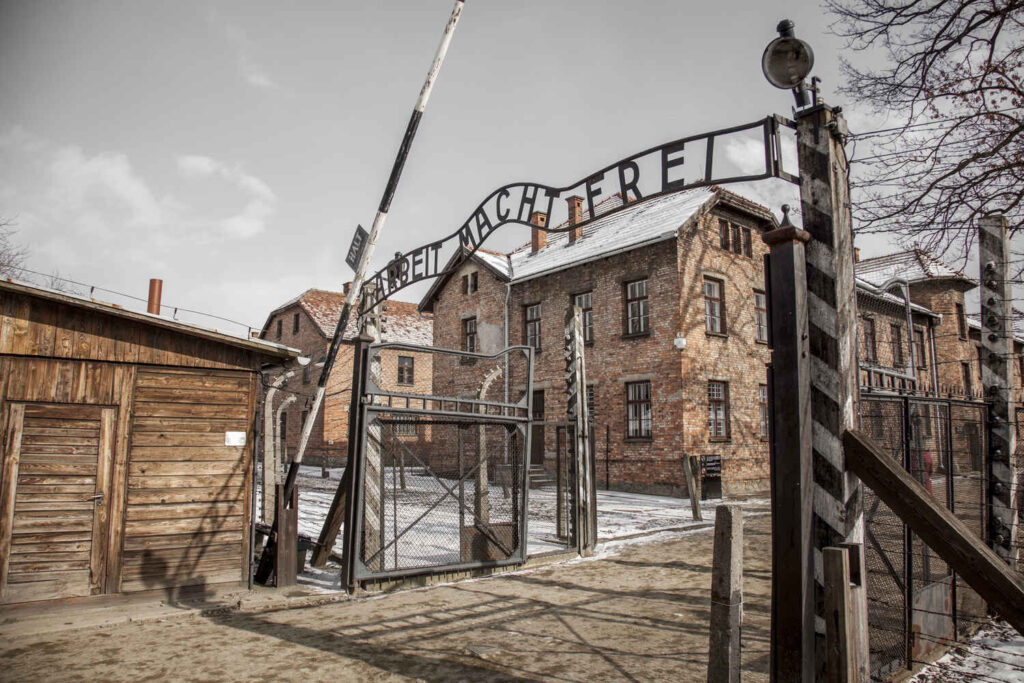
Day Trip Idea
Auschwitz Tours From Warsaw
If you’d like to add Auschwitz to your trip, our guide compares the best tours from Warsaw, with times, prices and what’s included.