
Renting a Car in Poland (2026): Rules, Tolls, Parking
Poland is an easy country to drive in, with good motorways, fair prices for fuel and plenty of rental desks at the airports. A car gives you the freedom to reach mountain villages, quiet castles and small towns that trains and tours often skip.
In this guide, we’ll cover what you need to rent a car, the insurance, the main driving rules, tolls, fuel and parking in Warsaw and Krakow. You’ll also find driving times to Auschwitz and tips for taking the car abroad.
In Short
- Drivers from outside Europe should bring an International Driving Permit, together with their home license.
- You’ll need a credit card in the main driver’s name, as the rental company blocks a deposit on it.
- Most motorways are free for cars, but the A4 between Katowice and Krakow charges 18 zł at each of its two toll gates.
- Headlights must be on all day, all year, and the alcohol limit is very low, so don’t drink at all before driving.
- Street parking in central Warsaw is free on weekends, while central Krakow charges every day 9:00 AM–10:00 PM.
Join Our Facebook Group
Planning a trip to Auschwitz, Krakow or Warsaw? Ask questions, swap tips and share your plans with other people heading to Poland. It’s free to join.
In This Guide
- Do You Need a Car in Poland?
- What You Need to Rent a Car in Poland: License, Age and Card
- Car Rental Insurance in Poland: What’s Included
- Where to Rent a Car in Poland: Warsaw and Krakow Airports
- Driving Rules in Poland: Speed Limits, Lights and Alcohol
- Toll Roads in Poland: Which Motorways Charge Cars?
- Fuel Prices in Poland
- Parking in Warsaw and Krakow: Hours and Prices
- Clean Transport Zones in Warsaw and Krakow
- Driving Times in Poland: Warsaw, Krakow and Auschwitz
- Taking a Rental Car Abroad From Poland
- Breakdowns, Accidents and Emergency Numbers in Poland
- Is Renting a Car in Poland Worth It?
- FAQ
Do You Need a Car in Poland?
Before anything else, it’s worth asking if a car really helps on your trip. For Warsaw, Krakow and Auschwitz, the answer is often no, as fast trains link the two cities in about 2.5 hours.
City centers also have paid parking zones and clean-air zones, so a car can be more work than help there. A train, a tram or a guided tour is usually the easier choice for a city break.
A car makes much more sense for the Tatra Mountains, Zakopane, small towns and places with few buses, like Treblinka. It’s also handy for families with lots of luggage, as you can stop wherever you like.

What You Need to Rent a Car in Poland: License, Age and Card
This is the part that worries most people, but it’s quite simple once you know the rules. A driver’s license from the EU, the EEA or Switzerland is valid in Poland as it is.
Drivers from outside Europe should bring an International Driving Permit, or IDP, together with their home license. US drivers need one by law, and an IDP is only valid when you show it with your license.
Rental desks also have their own rules, so it’s best to check before you book. Avis asks for an IDP or a sworn English translation for licenses from outside Europe or in a non-Latin alphabet. It also doesn’t accept digital licenses.
- Minimum age: Sixt rents small cars from age 19, and Avis from age 21. Both ask for a license held for at least a year.
- Young driver fee: Both companies charge extra for younger drivers, under 23 at Sixt and under 25 at Avis.
- Payment card: A credit card in the main driver’s name. Sixt accepts debit cards only for smaller cars, and Avis doesn’t take cash or prepaid cards.
- Deposit: Sixt blocks €200–€1,000 on top of the rental price, depending on the car. Avis blocks the rental price plus €200.
Bring your passport too, as it’s asked for as photo ID at the desk. The deposit is released after you return the car, though it can take a few days to show on your card.
Car Rental Insurance in Poland: What’s Included
Insurance is where a cheap rental can get more expensive, so it helps to know the basics. Third-party liability insurance, called OC in Polish, is required by law and comes with every rental car.
- OC (third-party liability): Pays for damage you cause to other people and their property. It’s always included.
- CDW (Collision Damage Waiver): Limits what you pay for damage to the rental car to the excess in your contract.
- TP (Theft Protection): Limits what you pay to the excess if the car is stolen.
Even with CDW, some parts are often left out. Sixt’s CDW doesn’t cover wheels and tires, windshields, mirror glass, wipers, the interior or the underbody, so read your contract before you sign.
Our tip is to walk around the car at pick-up and take photos of any marks or scratches. It takes five minutes, and it can save you an argument when you return it.
Where to Rent a Car in Poland: Warsaw and Krakow Airports
The easiest place to pick up a car is at the airport, as all the big companies have desks there. Most of them also have offices in the city, which can be handy at the end of a city stay.
At Warsaw Chopin Airport, the rental desks are in the public arrivals hall and on the mezzanine. They include Avis, Budget, Enterprise, Europcar, Hertz, Sixt, Green Motion and several Polish companies.
The rental cars at Warsaw Chopin Airport are parked at the outdoor P34 car park, a short ride away. A free shuttle bus links it with the Express car park next to the terminal every 15 minutes, 6:00 AM–midnight.
At Krakow Airport, all the rental desks are on level +1 of the passenger terminal. You’ll find Avis, Budget, Enterprise, Europcar, Hertz, Sixt, Green Motion and a few Polish companies there.
Driving Rules in Poland: Speed Limits, Lights and Alcohol
Driving in Poland feels much like driving in the rest of Europe, and you drive on the right. A few rules catch people out, though, and the first one is the headlights, which must be on all day, all year.
- Towns and cities: 50 km/h, day and night
- Residential zones: 20 km/h
- Outside towns: 90 km/h
- Expressways (S roads): 100 km/h with one lane each way, 120 km/h with two lanes each way
- Motorways (A roads): 140 km/h
The alcohol limit is only 0.2 per mille, which is very low, and even one drink can put you over it. Drink driving is treated very seriously in Poland, so it’s best not to drink at all before you drive.
Seat belts are required in the front and back, and children under 1.5 meters need a child seat. You can only use your phone hands-free, and speed cameras are common.
Every car must carry a fire extinguisher and a warning triangle, and rental cars should already have them. It’s still worth checking the trunk before you drive away.
Winter tires aren’t required by law in Poland, but rental cars usually have them in winter. Avis fits winter tires on all its cars, while Sixt charges a winter package fee between November and March.
Toll Roads in Poland: Which Motorways Charge Cars?
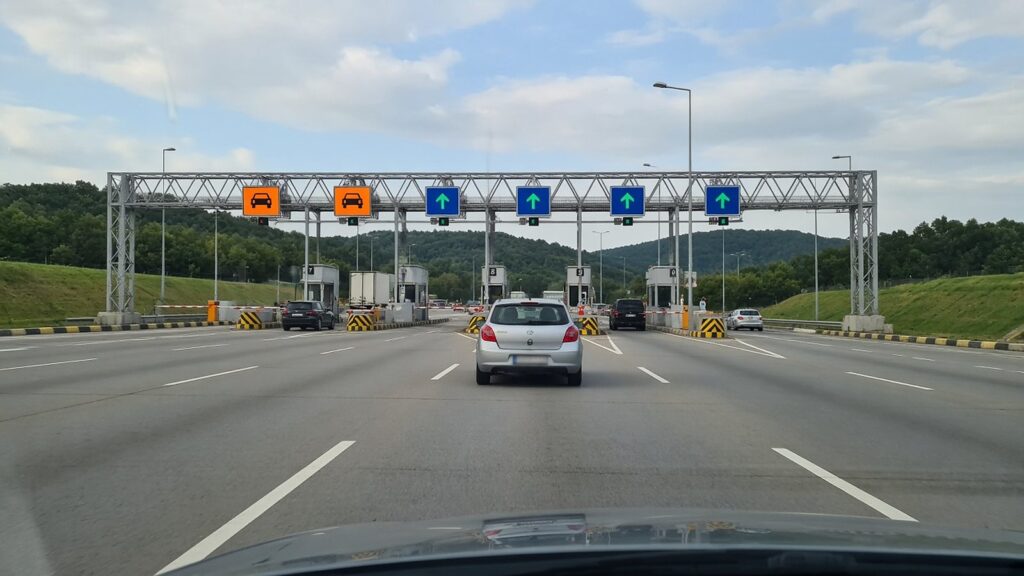
The good news is that most of Poland’s big roads are free for cars. Expressways, called S roads, are free, and the motorways managed by the state have been free for cars for a few years now.
A few private stretches still charge cars, and you pay at toll gates by card or cash. You can also pay through number-plate apps, which read your plate as you drive through.
- A4 Katowice–Krakow: 18 zł at each of the two toll gates, Mysłowice and Balice, so 36 zł for the full stretch.
- A2 German border–Konin: 141 zł for the full 255 km in a car.
- A1 Gdańsk–Toruń: A smaller fee on the northern stretch. South of Toruń, the A1 is free.
For most trips in southern Poland, you’ll only meet the A4. Krakow to Auschwitz on the A4 takes you through the Balice gate, so keep 18 zł or a card ready.
Fuel Prices in Poland
Fuel in Poland is cheaper than in many Western European countries, and petrol stations are easy to find on main roads. Prices change every week, so treat these as rough numbers only:
- Petrol (95): about 6.50 zł per liter
- Diesel (ON): about 8.15 zł per liter
- LPG (autogas): about 3.60 zł per liter
Diesel is often marked ON at the pump, short for olej napędowy, and petrol is marked PB95 or PB98. Rental cars are usually given out with a full tank and need to come back full, or you’ll pay a refueling fee.
Parking in Warsaw and Krakow: Hours and Prices
Parking in Warsaw
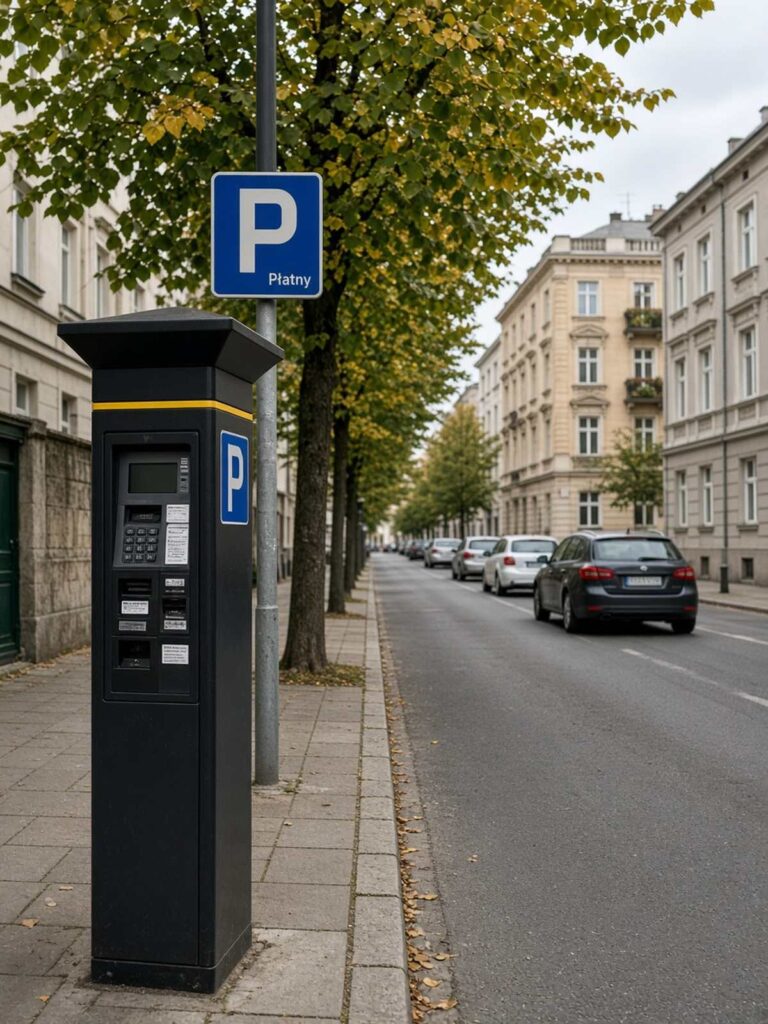
Street parking in central Warsaw is paid on weekdays 8:00 AM–8:00 PM, and it’s free on weekends. The first hour costs 4.50 zł, the second 5.40 zł and the third 6.40 zł, so three hours come to 16.30 zł.
You pay at a meter or with an app like moBILET, SkyCash Parking or Flowbird, right after you park. There’s no need to leave a ticket on the dashboard, as cars are checked by number-plate scanning.
Parking in Krakow
Parking in central Krakow costs more, and the zone closest to the Old Town is paid every day 9:00 AM–10:00 PM, except public holidays. There, the first hour costs 9 zł, the second 10 zł and the third 11 zł.
The outer zones are paid Monday to Saturday at the same times, and they’re a little cheaper. Parking without paying costs 400 zł, cut to 200 zł if you pay within seven days.
For a Krakow stay, a hotel with parking is often the easiest choice. You can then leave the car there and walk around the Old Town.
Clean Transport Zones in Warsaw and Krakow
Both Warsaw and Krakow have clean transport zones, called SCT in Polish, which keep older cars out of the center. Warsaw’s zone covers most of the city center, and Krakow’s covers about half the city.
In Krakow, petrol cars need to be Euro 4 or built in 2005 or later, and diesels Euro 6 or built in 2014 or later. Cars registered in Poland that meet the rules don’t need to do anything, as the system checks them automatically.
Rental cars from Polish airports are Polish-registered and usually quite new, so they should be fine. Cars with foreign plates, like one rented in Germany, need to be registered in Krakow’s system before they enter the zone.
Driving Times in Poland: Warsaw, Krakow and Auschwitz
Distances in Poland look short on a map, but the times below are without traffic, so allow a little extra. Here’s how long the most common drives take:
| Route | Distance | Time without traffic |
|---|---|---|
| Warsaw to Krakow | 296 km | about 3 h 25 min |
| Warsaw to Auschwitz | 354 km | about 3 h 45 min |
| Krakow to Auschwitz | 69 km | about 1 h 05 min |
| Krakow Airport to Auschwitz | 59 km | about 55 min |
| Krakow to Zakopane | 106 km | about 1 h 40 min |
| Chopin Airport to central Warsaw | 9 km | about 15 min |
Warsaw to Krakow uses the S7 expressway, which is free, and Warsaw to Auschwitz uses the S8, A2 and A1, which are free too. Krakow to Auschwitz uses the A4 with one toll gate, and our Krakow to Auschwitz guide covers the drive in more detail.
Auschwitz I and Birkenau are about 2 km apart, a five-minute drive. Plan a full day for Auschwitz from Warsaw, as it’s more than seven hours of driving there and back.

Taking a Rental Car Abroad From Poland
You can usually take a Polish rental car to Germany or the Czech Republic, but you need to tell the rental company first. Most companies charge a cross-border fee, and some brands and countries are off-limits.
At Avis, the cross-border fee is 55.35 zł per day, up to 553.50 zł per rental. Germany, Czechia, Slovakia and Austria are allowed, but Ukraine, Belarus, Russia and the Baltic countries aren’t.
Sixt asks you to tell them about any trip abroad, and countries outside the EU and Schengen need written consent. Some Sixt brands, like BMW, Audi and Volkswagen, can’t go to Lithuania, Latvia or Estonia.
Ukraine is not an option with the big rental companies, so plan a train or bus for that part of the trip. In the Czech Republic, you’ll need an e-vignette for the motorways, which you can buy online before you cross.
Breakdowns, Accidents and Emergency Numbers in Poland
Nobody plans for a breakdown, but it helps to have the numbers saved in your phone. In an emergency, call 112 for the police, an ambulance or the fire service.
- 112: Emergencies only, not for breakdowns or traffic news.
- Your rental company: Call their assistance number first if the car breaks down.
- 9637: The national road emergency service for towing, which you pay for.
- 19 111: Road conditions and traffic information, open 24/7.
After an accident in a rental car, call the police and ask for their report, and tell the rental company right away. Don’t agree to pay any claims at the scene, as the rental company will handle them.
Is Renting a Car in Poland Worth It?
For a city trip to Warsaw, Krakow and Auschwitz, we’d skip the car and use trains and tours instead. Parking, clean-air zones and city traffic make a car more trouble than it’s worth there.
To reach Auschwitz without driving, a guided Auschwitz tour from Krakow with hotel pickup is the easiest option. Starting in Warsaw? Our guide to Auschwitz tours from Warsaw compares the full-day trips.
A car is worth it for the mountains, small towns and slower road trips, especially with family or friends. Pick it up at the airport on the way out of the city, and you’ll avoid most of the stress of city driving.
For more ideas, see our guides to the best day trips from Krakow and the best day trips from Warsaw. Many of those places are easy to reach by car. Our 10-day Poland itinerary can also help you plan a longer trip.

FAQ
Do You Need an International Driving Permit in Poland?
A license from the EU, the EEA or Switzerland is valid in Poland as it is. Drivers from outside Europe should bring an International Driving Permit with their home license, and US drivers need one by law. Avis also asks for one for licenses in a non-Latin alphabet.
How Old Do You Have to Be to Rent a Car in Poland?
Sixt rents small cars from age 19, and Avis from age 21, with a license held for at least a year. Bigger cars need older drivers, often 25 and over. Younger drivers pay a young driver fee, under 23 at Sixt and under 25 at Avis.
Can You Rent a Car in Poland With a Debit Card?
Sometimes, but a credit card in the main driver’s name is much easier. Sixt accepts debit cards only for smaller cars, and Avis accepts most Visa and Mastercard debit cards but not cash or prepaid cards. The deposit is blocked on the card, about €200 at Avis and €200–€1,000 at Sixt.
Do You Pay Tolls on Polish Motorways?
Most motorways and all expressways are free for cars in Poland. The main exception is the A4 between Katowice and Krakow, which charges 18 zł at each of its two toll gates. The A2 between the German border and Konin costs 141 zł for the full stretch, and part of the A1 near Gdańsk also charges a fee.
How Much Does Parking Cost in Warsaw and Krakow?
In central Warsaw, street parking costs 4.50 zł for the first hour, on weekdays 8:00 AM–8:00 PM, and weekends are free. In central Krakow, the first hour costs 9 zł, and the zone by the Old Town is paid every day 9:00 AM–10:00 PM. Parking without paying in Krakow costs 400 zł.
Can You Take a Polish Rental Car to Germany or Ukraine?
You can usually take a Polish rental car to Germany or the Czech Republic. You need to tell the rental company first and pay a cross-border fee, and at Avis the fee is 55.35 zł per day, up to 553.50 zł. Ukraine and Belarus are not allowed with the big rental companies.

Planning Your Trip
Krakow to Auschwitz Guide
Our guide compares driving, trains, buses and tours for the trip to Auschwitz, with times and prices.